
For many Nigerian workers, getting to work each day has become another reminder of how much the cost of living has changed. From rising transport fares to the growing cost of meeting basic household needs, stretching a monthly salary has become increasingly difficult. Now, the Federal Government has announced a fresh intervention that could offer some relief, approving a ₦70,000 monthly transport allowance for public servants over the next six months, alongside a plan to clear outstanding peculiar allowance arrears.
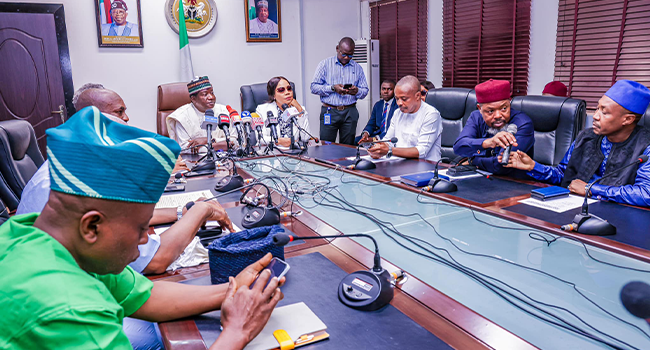
The discussions took place in Abuja on Tuesday, October 27, 2026, at a conciliation meeting between the government and the Nigeria Labour Congress (NLC). The outcome was recorded in a memorandum of understanding signed by four representatives: Director-General of Budget Timi Yakubu, NLC President Joe Ajaero, Permanent Secretary of the Service Welfare Office Dr Garba Abdul S.U., and Minister of Labour and Employment Dr Muhammad Maigari Dingyadi.
The agreement provides for a ₦70,000 monthly transport allowance for public servants for six months from November. It also provides for outstanding peculiar allowance arrears, effective from May 1, 2026, to be paid in three equal monthly installments beginning in November.
The parties also discussed health workers’ remuneration, tax relief and hazard allowances for agricultural officers. However, they failed to agree on the effective date for implementing the national minimum wage, opting instead to immediately establish a negotiation committee.
The agreement raises a broader question: how much can a temporary allowance do to ease the financial pressure on workers when the cost of living remains a concern?
The ₦70,000 monthly transport allowance offers an opportunity to examine the difference between providing immediate financial support and addressing the economic pressures that make such assistance necessary. For eligible public servants, the payment could help cover commuting expenses and ease some of the strain on their monthly budgets, at least for the six months it is scheduled to last.
However, the intervention has also drawn attention to its limited duration and the categories of people it covers. While public servants stand to benefit, other Nigerians facing similar financial difficulties, including private-sector workers, informal traders and unemployed citizens, are not covered by the arrangement as outlined. For some, this distinction has become a point of debate, particularly over the reach and fairness of government assistance.
Reactions on social media reflect these competing perspectives, with discussions extending beyond the amount approved to the timing of the intervention, its six-month lifespan and the people left outside its scope. These responses offer a glimpse into how the policy is being received by members of the public, even as the allowance’s actual impact will depend on implementation and the circumstances of those eligible to receive it.
Reactions on X have focused not only on the timing and coverage of the ₦70,000 allowance but also on its possible political implications and whether it offers a lasting response to the rising cost of living.
DonAza (@DonAzag) remarked, “This old man sabi street work,” suggesting that the decision reflected political calculation. Uchen (@Elen_net) described the announcement as manipulation, while Mercy Agera predicted that civil servants would still not vote for President Bola Tinubu. Similarly, @dollarain2000 described the move as “vote buying”, arguing that the timing might not influence voters’ decisions. These comments reflect the suspicions of some users, but do not establish the government’s motives or predict how workers will vote.
Other commenters focused on the wider economic challenges and those excluded from the intervention. Ibehzym questioned why the support was directed at unionised workers when other vulnerable Nigerians were also struggling, while Muchmore (@MuchmoreGold) argued that the allowance should be viewed against the country’s high cost of living. On Facebook, Halilu Amanyi Abdulrahman welcomed the initiative but asked what the government was doing for Nigerians outside the public service. Meanwhile, @skood009 criticised what the user saw as a preference for short-term payments over investment in solutions to underlying problems.
Odo Akaji also questioned what appeared to be a change in the government’s response to public hardship, asking: “But you guys said all was hunky-dory and well-meaning Nigerians were wrong in crying about the hardship. What changed?”
Taken together, the reactions show that while some Nigerians may welcome the prospect of financial relief, others remain sceptical about its timing, reach and long-term value. The allowance could help eligible public servants meet transport costs over the six months, but the wider challenge remains: whether temporary support can ease the pressure on households without more sustained action to address rising living costs.
About the Author


